
Closing the Year with Ghana: Rest, Renewal, and Contemporary Art
As the year draws to a close, Ghana offers a different kind of December — one shaped by rest, reflection, and a contemporary art scene quietly setting the tone for what comes next.

"Where the water meet" Courtesy of gallery 1957, 2025
December in Ghana often invites a slower rhythm. Beyond the coastline, the warmth, and the familiar language of rest, there is also a cultural pause — a moment when attention drifts from doing to noticing. As the year settles, contemporary art in Accra offers spaces not of spectacle, but of renewal, where looking becomes a way to close one chapter and prepare for another.
 courtesy of the curator, Essé Dabla-Attikpo
Two exhibitions unfolding in the city speak clearly to this moment: Where the Waters Meet by Otis Kwame Kye Quaicoe at Gallery 1957, and The Revenants by Dimitri Fagbohoun at The Mix Design Hub. Different in tone and approach, they reflect a contemporary art scene that understands rest not as retreat, but as a form of readiness.
Gallery 1957 and the Language of Rest
Gallery 1957 has established itself as a key institution within Ghana’s contemporary art landscape, presenting artists whose practices move between local experience and global conversation with ease. Its programme often sets a steady pace — one that encourages attention rather than urgency.

"Where the water meet" Courtesy of gallery 1957, 2025
Where the Waters Meet fits comfortably within this approach. Otis Kwame Kye Quaicoe, a Ghanaian painter based between Ghana and the United States, is known for centring Black figures in moments of pause and self-possession. His work has appeared in major international contexts, including the landmark exhibition When We See Us: A Century of Black Figuration in Painting, curated by the late Madam Koyoh Kouoh, situating his practice within wider conversations about Black presence and representation.

"Where the water meet" Courtesy of gallery 1957, 2025
Here, Quaicoe turns his attention to scenes of rest: figures reading, sitting by pools, floating in water, or standing just before entering it. These moments feel unhurried. The paintings are not about leisure as luxury, but about rest as something considered — even practiced.

"Where the water meet" Courtesy of gallery 1957, 2025
Small gestures carry weight: a hand holding a book open, a body paused at the water’s edge. Working largely in black and grey tones, Quaicoe gives his figures a grounded physical presence. The spaces they inhabit — gardens, open skies, water — feel held rather than expansive, suggesting balance rather than escape.

"Where the water meet" Courtesy of gallery 1957, 2025
In the context of year-end reflection, Where the Waters Meet reads as a reminder that slowing down can still be purposeful. Nothing dramatic happens here — and that, precisely, is the point.
Spiritual Continuity and Return
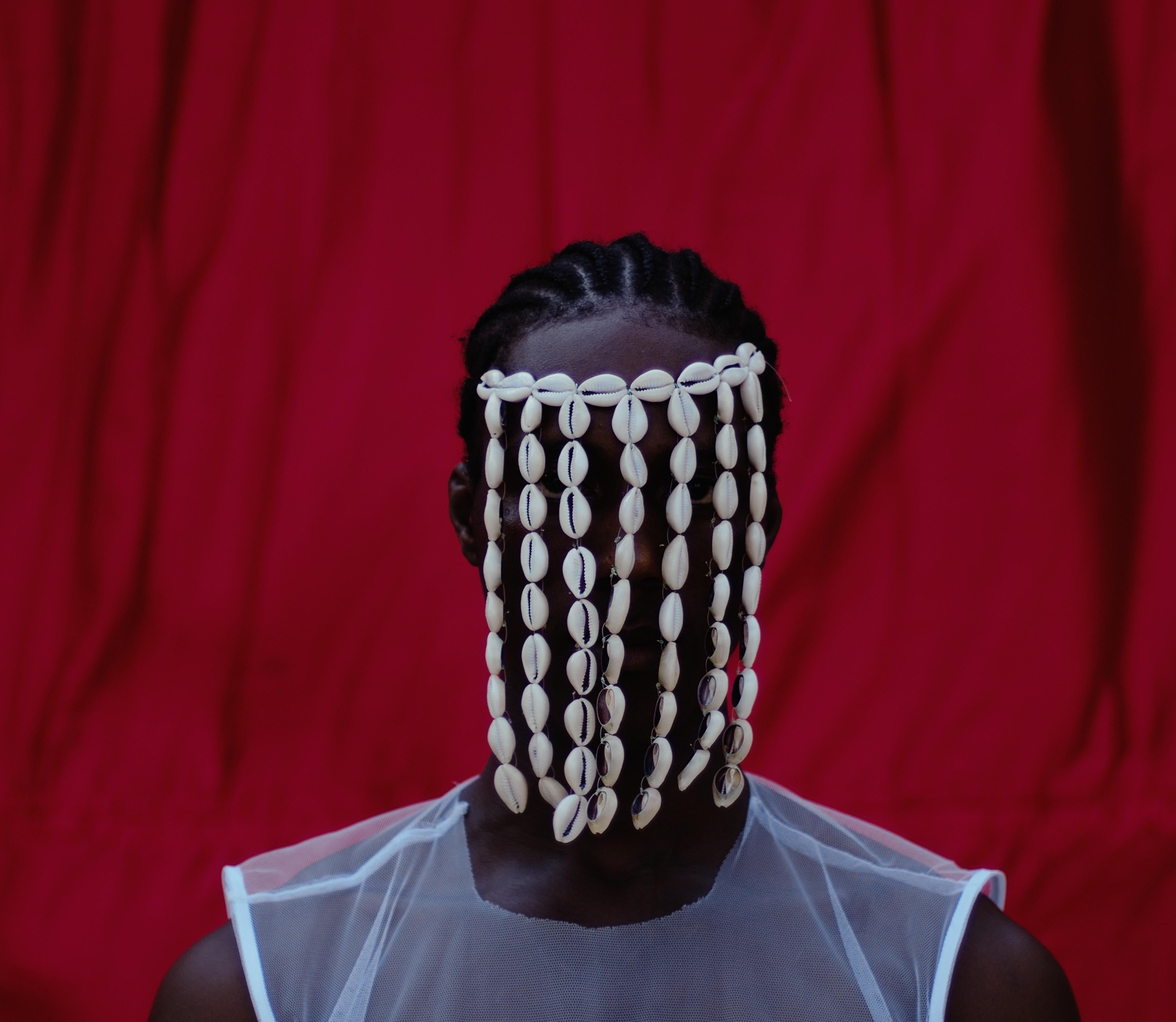
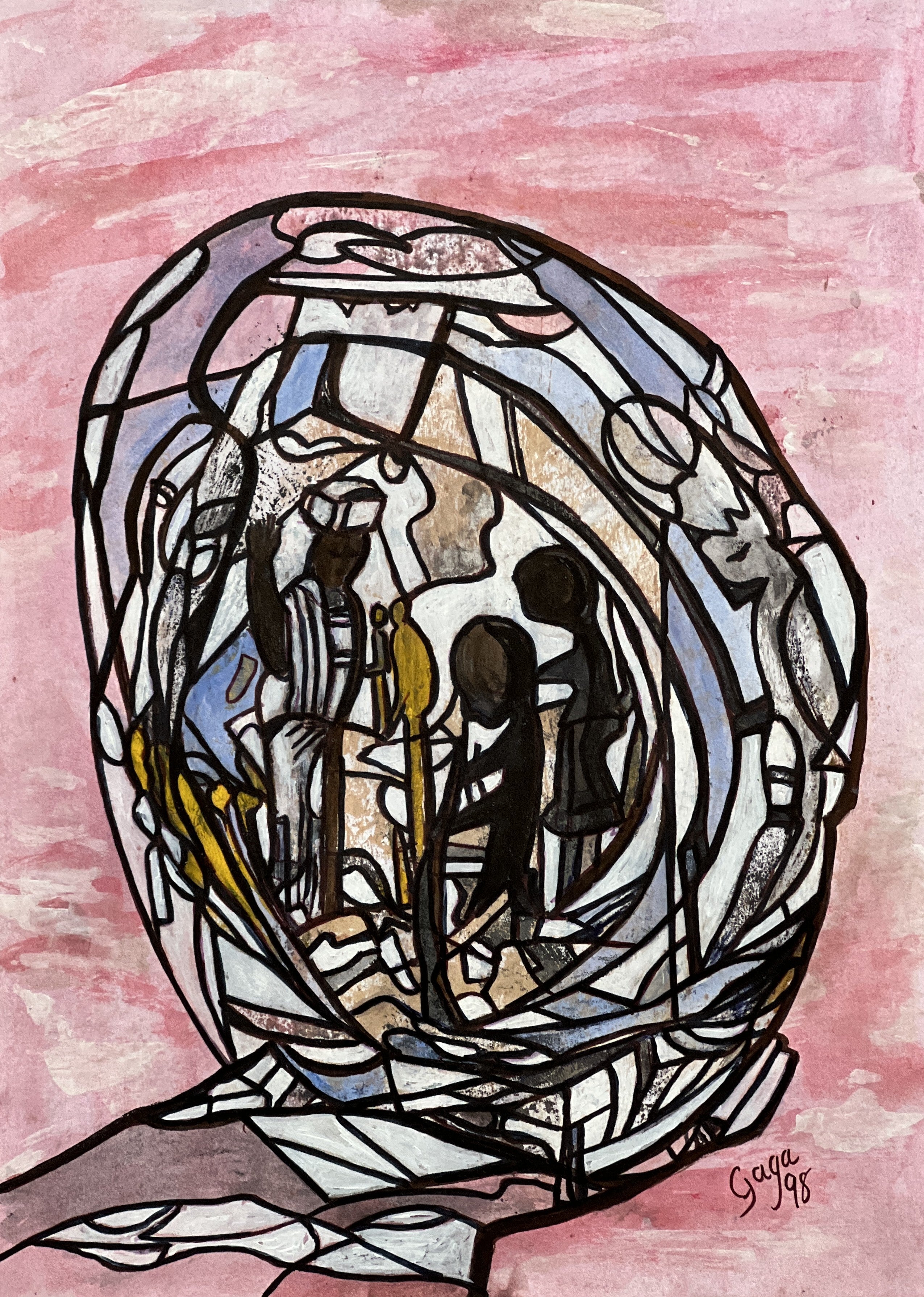
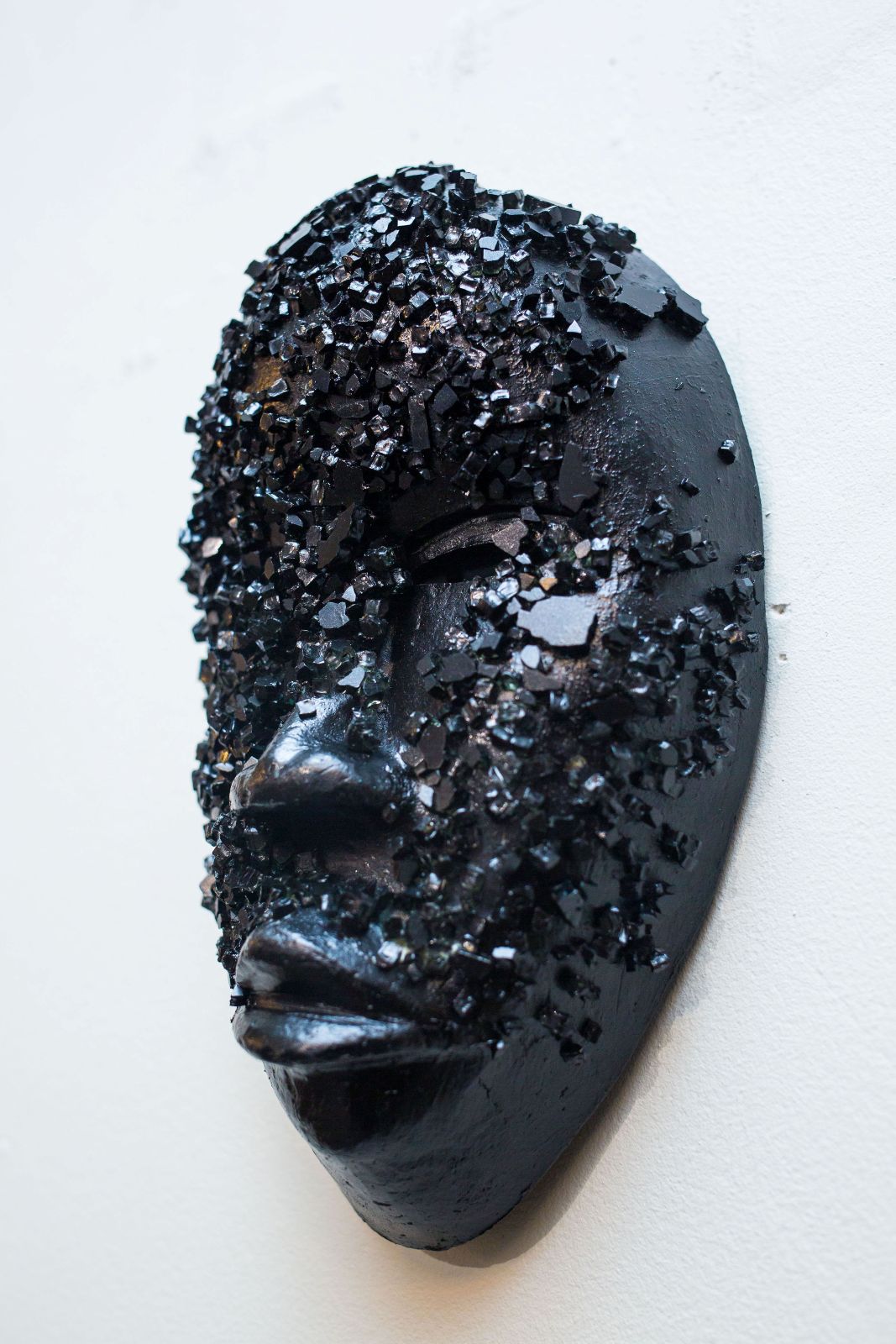
The Revenants, curated by Essé Dabla-Attikpo and presented at The Mix Design Hub, considers return not as arrival, but as an unsettled process — one shaped by memory, belief, and the question of what it means to come back at all.

Courtesy of the curator, Essé Dabla-Attikpo, 2025
Drawing from Vodun — a spiritual system centred on ancestral presence and balance — the exhibition reflects on how contemporary narratives of return often sit between ritual and performance. Rather than offering resolution, the work lingers in uncertainty, asking whether return can ever be complete, or whether it always requires re-making oneself along the way.

Courtesy of the curator, Essé Dabla-Attikpo, 2025
Dimitri Fagbohoun’s practice unfolds within this tension. Working across drawing, sculpture, video, and installation, the Beninese-Ukrainian-French artist brings together symbols and forms from multiple African traditions, not to trace a single lineage, but to develop a personal visual language shaped by movement and encounter.

Courtesy of the curator, Essé Dabla-Attikpo, 2025
As the artist, Dimitri, notes, “It’s not just made like that. It’s continuity — it’s about the story you tell, the experience you are put to live in, and the way things balance and respond to each other.”
The exhibition resists immediacy. Figures appear composed and attentive, holding meaning without instruction. In this context, return is not nostalgic. It is active — something that circulates rather than concludes, and remains open to revision.
Ghana, Looking Ahead
Seen together, these exhibitions reflect a contemporary art scene confident in its range and direction. Accra holds space for both institutional clarity and culturally rooted practice, allowing different modes of engagement to exist side by side.

"Where the water meet" Courtesy of gallery 1957, 2025
As 2025 gives way to 2026, Ghana’s role in contemporary African art no longer feels emergent; it feels established, deliberate, and increasingly self-directed. As the country continues to gain international recognition — through global exhibitions, institutional leadership, and artist-led networks — these quieter moments matter. They suggest that Ghana’s growing presence is shaped not only by visibility, but by sustained thinking and care.
Closing the Year
As the year comes to an end, what Ghana’s contemporary art scene offers is not a finale, but a reset. Through exhibitions that value rest, return, and spiritual presence, December becomes less about wrapping things up and more about making space.

Courtesy of the curator, Essé Dabla-Attikpo, 2025
Ghana enters 2026 not with a grand gesture, but with a steady hand.
As you close the year, we invite you to spend time with these exhibitions and the ideas they hold. From Gallery 1957 to The Mix Design Hub, the work encourages reflection, rest, and careful looking.

Courtesy of the curator, Essé Dabla-Attikpo, 2025
Follow unx-art on Instagram and Facebook to stay connected with contemporary art practices shaping Ghana and the wider continent. Return to the exhibitions, sit with the work, and see what stays with you as the year turns. Discover our curations on unx-art.net
Our Correspondent

Milra Omowumi Natashia King is a Sierra Leonean MBA student based in Ghana. Her writing reflects a passion for contemporary art, with attention to the stories embedded in design, drawing, and material practice.